

What Is Moringa Powder?
- mrorganicsco
- May 10
- 8 min read

Moringa powder is made from the dried and ground leaves of Moringa oleifera, a fast-growing tree native to the sub-Himalayan regions of South Asia. It is now cultivated across Africa, Southeast Asia, and Latin America.
To make moringa powder, fresh leaves are harvested, gently dried at low temperatures to preserve their nutrients, and then finely milled into a bright green powder. The result is one of the most nutrient-dense whole-food supplements on the planet.
Moringa has earned several nicknames over the centuries:
The Miracle Tree
The Drumstick Tree
The Tree of Life
These names reflect its extraordinary nutritional content — moringa contains over 92 nutrients, 46 antioxidants, and 36 anti-inflammatory compounds, making it one of the most complete plant foods known to science.
Unlike synthetic supplements, moringa provides nutrients in their natural food-matrix form, which promotes better bioavailability and absorption. This is why traditional practitioners across India, Africa, and Southeast Asia have relied on moringa for thousands of years — particularly for nursing mothers, malnourished children, and people with chronic fatigue.
Nutritional Profile of Moringa Powder
One of the most compelling arguments for moringa powder is its sheer nutrient density. A single 10-gram serving (about 2 teaspoons) delivers an impressive range of vitamins and minerals.
Moringa Powder — Nutrition Per 10g Serving
Nutrient | Amount per 10g | % Daily Value | Notes |
Calories | 37 kcal | — | Very low calorie density |
Protein | 2.7g | 5% | All 9 essential amino acids |
Vitamin A | 1,115 µg | 124% | Exceeds daily value |
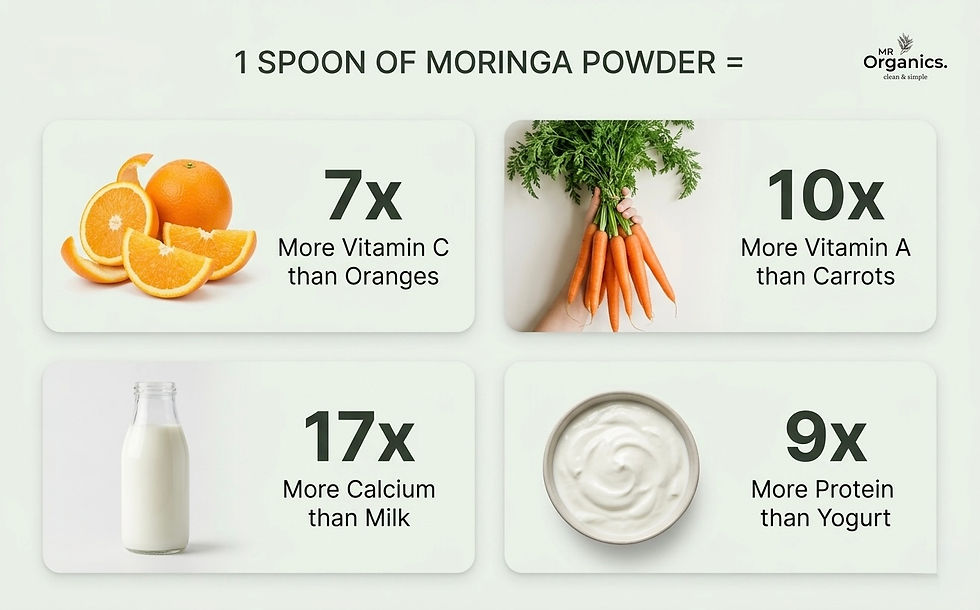
Vitamin C | 17mg | 19% | 7× more than oranges (gram for gram) |
Vitamin E | 1.6mg | 11% | Potent antioxidant |
Vitamin K | 19µg | 16% | Important for bone health |
Calcium | 185mg | 14% | 4× more than milk (gram for gram) |
Iron | 2.8mg | 16% | 3× more than spinach |
Potassium | 337mg | 7% | Supports heart health |
Magnesium | 45mg | 11% | Muscle & nerve function |
Zinc | 0.6mg | 5% | Immune support |
Quercetin | ~100mg | — | Powerful antioxidant |
Chlorogenic Acid | ~50mg | — | Anti-inflammatory compound |
Values are approximate and may vary based on growing conditions, harvest time, and processing method.
How Moringa Compares to Common Foods (gram for gram)
Nutrient | Moringa Powder | Spinach | Milk | Oranges |
Vitamin A | 10× more | Base | Lower | Lower |
Calcium | 4× more | Lower | Base | Lower |
Vitamin C | 7× more | Lower | Trace | Base |
Potassium | 3× more | Lower | Lower | Base |
Protein | 2× more | Lower | Lower | Trace |
Iron | 3× more | Base | Trace | Trace |
Top 8 Health Benefits of Moringa Powder
Moringa has been studied extensively over the past two decades. While more large-scale human trials are still needed, the existing research is very promising. Here are the most well-supported benefits:
1. Regulates Blood Sugar
Studies show moringa may reduce fasting blood glucose levels. Isothiocyanates found in moringa are believed to improve insulin sensitivity and reduce glucose absorption in the gut. This makes moringa particularly interesting for people managing type 2 diabetes or prediabetes — though it should never replace prescribed medication.
2. Supports Heart Health
Moringa may help lower LDL (bad) cholesterol and reduce arterial inflammation. Its high potassium content also supports healthy blood pressure. Animal studies have shown reduced plaque formation in arteries, though human studies are still ongoing.
3. Powerful Anti-Inflammatory
Moringa contains isothiocyanates, flavonoids, and phenolic acids — compounds shown in laboratory studies to suppress key inflammatory markers including TNF-α and IL-6. Chronic inflammation is linked to most modern diseases, making this one of moringa's most valuable properties.
4. Boosts Immune System
High vitamin C, zinc, and beta-carotene content play essential roles in immune defense. Regular supplementation may help reduce the frequency and severity of common infections, particularly in people whose diets are low in these micronutrients.
5. Improves Brain Health
Moringa's antioxidants — particularly quercetin and chlorogenic acid — may protect neurons from oxidative damage. Early research suggests potential benefits for memory, focus, and mood, though more human studies are needed.
6. Fights Fatigue & Boosts Energy
Iron deficiency is one of the most common causes of fatigue worldwide, especially among women and vegetarians. Moringa's rich iron content, combined with vitamin C (which enhances iron absorption), can be a game-changer for people struggling with low energy levels.
7. Strengthens Bones
With high levels of both calcium and phosphorus, moringa supports healthy bone formation and density. This may be particularly beneficial for postmenopausal women and elderly individuals at risk of osteoporosis.
8. Improves Skin & Hair Health
Vitamins A, C, and E — all present in moringa — are essential for collagen production, skin repair, and protection against UV-related damage. Moringa oil is also widely used topically to hydrate skin and strengthen hair follicles.
Important: While the evidence is encouraging, most moringa studies have been conducted on animals or in small human trials. Always consult a healthcare professional before using moringa as a treatment for any medical condition.
How to Use Moringa Powder
One of moringa powder's biggest advantages is its versatility. Its mild, earthy flavor — similar to matcha or spinach but less bitter — means it can be added to dozens of recipes without overpowering other ingredients.
Best Ways to Use Moringa Powder
Smoothies: Add 1 teaspoon to green smoothies. Pairs especially well with banana, mango, pineapple, or coconut milk.
Moringa Tea: Whisk ½ teaspoon into hot (not boiling) water with honey and lemon for a soothing herbal drink.
Soups & Curries: Stir into dal, lentil soup, or vegetable curry after cooking to preserve heat-sensitive nutrients.
Salad Dressings: Blend into tahini, vinaigrettes, or yogurt-based dressings for an easy nutrition boost.
Baked Goods: Add 1–2 teaspoons to muffin batter, energy balls, or pancakes for a nutrient-rich green twist.
Capsules: If you dislike the taste, capsule form is a convenient and equally effective alternative.
Pro Tips
Don't boil moringa. Heat above 45°C degrades heat-sensitive nutrients like vitamin C. Always add the powder after cooking or to warm (not hot) liquids.
Pair with vitamin C foods. Combining moringa with citrus fruits significantly enhances iron absorption — a smart strategy for vegetarians and vegans.
Start small. If you're new to moringa, start with ¼ teaspoon per day and increase gradually to avoid digestive discomfort.
Moringa Powder Dosage Guide
There is no officially established Recommended Daily Allowance (RDA) for moringa powder. However, human studies and traditional use provide helpful guidance. The golden rule: start low, go slow.
Recommended Dosage by Group
Group | Recommended Daily Dose | Notes |
Healthy Adults | 1–2 tsp (3–6g) | General wellness and nutrition |
Athletes | 2–3 tsp (6–9g) | May support recovery and energy |
Seniors | 1 tsp (3g) | Start low; monitor for drug interactions |
Children (5–12 yrs) | ¼–½ tsp (0.75–1.5g) | Only with parental and pediatric guidance |
Pregnant Women | Consult doctor first | Avoid root, bark, and flower preparations |
People on Medications | Consult doctor first | Possible interactions (see Side Effects section) |
Beginner's Dosage Plan
Week 1–2: ½ tsp (1.5g) per day — assess tolerance
Week 3–4: 1 tsp (3g) per day — standard maintenance dose
Month 2+: 1–2 tsp (3–6g) per day — optimal for most adults
Maximum: Up to 3 tsp (9–10g) per day — only if well-tolerated
Moringa vs Other Superfoods
The superfood market is crowded. Here's how moringa compares honestly against the most popular alternatives:
Feature | Moringa | Spirulina | Matcha | Ashwagandha | Wheatgrass |
Protein | Good (complete) | Excellent | Low | Low | Low |
Vitamins & Minerals | ★★★★★ | ★★★☆☆ | ★★☆☆☆ | ★★☆☆☆ | ★★★☆☆ |
Antioxidants | ★★★★★ | ★★★★☆ | ★★★★★ | ★★★☆☆ | ★★★☆☆ |
Anti-Inflammatory | ★★★★★ | ★★★★☆ | ★★★☆☆ | ★★★★☆ | ★★★☆☆ |
Adaptogenic Effect | Mild | Mild | None | Excellent | None |
Taste | Mild/earthy | Strong/fishy | Bitter/grassy | Bitter/earthy | Very grassy |
Versatility | ★★★★★ | ★★★☆☆ | ★★★★☆ | ★★★☆☆ | ★★☆☆☆ |
bottom line: Moringa wins on overall nutritional breadth and versatility. Spirulina edges ahead on protein. Matcha is better for focus and calm energy. Ashwagandha is superior specifically for stress and cortisol management. Many people combine 2–3 of these for a comprehensive supplement stack.
How to Buy & Store Moringa Powder
What to Look For When Buying
Quality Factor | What to Look For | Red Flags |
Color | Bright, vibrant green | Dull, yellowish, or brown color |
Origin | India, Ghana, or Philippines | No country of origin listed |
Processing | Low-temperature or freeze-dried | High-heat processed |
Certifications | USDA Organic, Non-GMO, ISO certified | No third-party testing |
Heavy Metals | Certificate of Analysis (COA) available | No COA provided |
Packaging | Dark, airtight bag or glass jar | Clear plastic bags |
How to Store Moringa Powder
Store in a cool, dark place a pantry or cupboard away from the stove
Seal tightly after every use to prevent moisture absorption
Refrigerate in hot or humid climates
Properly stored moringa stays fresh for 12–24 months
Once opened, use within 6 months for best nutrient potency
Side Effects & Safety
Moringa leaf powder is considered very safe for most people when taken in typical dietary amounts. However, there are important safety considerations to be aware of:
Potential Drug Interactions
Thyroid medications (e.g. levothyroxine): Moringa may affect thyroid hormone levels — consult your doctor before use.
Blood thinners (e.g. warfarin): High vitamin K content may interfere with anticoagulant medications.
Diabetes medications: Moringa's blood-sugar-lowering effect may enhance diabetic drugs, potentially causing hypoglycemia.
Blood pressure medications: Moringa may compound the effects of antihypertensive drugs.
Pregnancy & Breastfeeding
Pregnant women should avoid moringa root, bark, and flower preparations as these parts may stimulate uterine contractions. Leaf powder in small, dietary amounts is generally considered safe but always consult your obstetrician first.
Common Mild Side Effects
Some people experience mild digestive symptoms when first starting moringa — including bloating, loose stools, or mild nausea. These typically resolve within a week as the body adjusts. Starting with a small dose (¼ teaspoon) and increasing gradually greatly reduces this risk.
Frequently Asked Questions (FAQ)
What is moringa powder and where does it come from?
Moringa powder is made from the dried and ground leaves of the Moringa oleifera tree, native to South Asia. The tree is now grown across India, Africa, the Philippines, and Latin America. Leaves are harvested, low-temperature dried, and milled into a fine green powder used as a dietary supplement.
How much moringa powder should I take per day?
Most studies suggest 1–2 teaspoons (3–6 grams) per day is safe and effective for most adults. Start with ¼ to ½ teaspoon daily if you're new to moringa, and increase over 2–3 weeks. Do not exceed 10g per day without medical supervision.
What does moringa powder taste like?
Moringa has a mild, earthy, slightly bitter flavor — often compared to a combination of matcha and spinach with subtle grassy notes. It is less pungent than spirulina and more palatable than wheatgrass. It blends well into smoothies, juices, and dishes with bold flavors.
When is the best time to take moringa powder?
Moringa can be taken at any time of day. Most people prefer it in the morning to use its energizing iron and B-vitamin content throughout the day. Taking it with meals also improves absorption and reduces any mild digestive sensitivity.
Is moringa powder safe during pregnancy?
Pregnant women should avoid moringa root, bark, and flower preparations. Leaf powder in small dietary amounts is generally considered safe, but always consult your obstetrician or healthcare provider before supplementing during pregnancy.
Can moringa powder help with weight loss?
Moringa is not a weight loss supplement, but it may support weight management indirectly. Its high fiber and protein content promotes satiety, and research suggests it may improve insulin sensitivity. It works best as part of a balanced diet and active lifestyle — not as a standalone solution.
Does moringa powder expire?
Yes. Properly stored moringa powder lasts 1–2 years. Signs it has gone bad include a brownish or yellowish color (fresh moringa is bright green), a musty smell, or visible clumping from moisture. Store in an airtight container in a cool, dark pantry for best results.
Is moringa suitable for vegans and vegetarians?
Absolutely. Moringa is 100% plant-based and ideal for vegans and vegetarians. It provides complete protein (all nine essential amino acids), highly absorbable iron, and calcium — nutrients that are often harder to obtain from plant foods alone.
Can I give moringa to my children?
Moringa is used in nutritional programs for children in developing countries and is generally safe for children over 5 in small amounts (¼–½ teaspoon per day). Always consult a pediatrician before giving any supplement to a child.
How is moringa powder different from moringa capsules?
The core ingredient is the same — dried moringa leaf. Loose powder is more flexible for adding to food and drinks and is often faster to absorb. Capsules are more convenient for travel and for those who dislike the taste. Always check the Certificate of Analysis regardless of form to ensure quality.
Final Thoughts
Moringa powder is one of the most nutritionally complete plant-based supplements available today. Whether you're looking to fill nutritional gaps, boost energy, support your immune system, or simply add more whole-food nutrients to your diet moringa is a practical, affordable, and well-researched option.
Start with a small dose, choose a high-quality organic product, and incorporate it into your daily routine in ways that work for you. The results won't happen overnight, but consistent use over weeks and months is where the real benefits shine.
Have questions about moringa? Drop them in the comments below we'd love to help!


Comments